Predator-Mediated Competition
Charles E. Kay. 2010. Predator-Mediated Competition: What happens when there is a second, alternative prey in a system? Muley Crazy, July/August 2010.
Full text:
In systems with a single predator and single prey, the predator cannot generally take the prey to extinction due to declining return rates — that is the predators usually starve to death before they can find the last few prey. So while mountain lions, for example, can have a negative impact on mule deer, the cats can only take the deer population so low before the lions begin to run out of food and increasingly turn to killing each other. But what happens when there is a second, alternative prey in a system? Counter intuitively, the additional prey species does not buffer, or reduce, the predation pressure on the first prey animal. Instead, fueled by alternative prey, the predator takes the more vulnerable species to even lower levels. This is called predator-mediated or apparent competition and where this occurs habitat and habitat improvements are largely irrelevant, contrary to what most biologists would have you believe.
A classic example of predator-mediated competition is now playing itself out in Yellowstone National Park. For over 60 years, 600 to 700 food-limited elk wintered in the thermal areas along the Firehole, Gibbon, and Madison Rivers in the west-central portion of the park. With the arrival of introduced wolves, however, the elk population began a precipitous decline with researchers predicting extinction — see The Ecology of Large Mammals in Central Yellowstone. The wolves have been able to do this because they have bison as an alternative prey. In fact, if the elk did not have a partial refugia by fleeing into the depths of the Madison River when confronted by wolves, the elk would already be extinct. The habitat is still there, after all this is a national park, but the elk are all but gone.
Similarly, moose-fueled wolves are in the process of eliminating mountain and woodland caribou across the length and breadth of Canada. While in Alaska, wolves fueled by salmon, yes salmon, have taken black-tailed deer, moose, and caribou to very low levels — much lower then if the wolves did not have salmon as an alternative prey. In Nevada, mountain lions that prey on wild horses have a much greater impact on mule deer than cougar populations without feral equines as alternative prey. It has also been reported that mountain lions have taken bighorn sheep to near extinction on several western ranges where the cats subsist on alternative prey.
In many parts of the West, white-tailed deer and mule deer are sympatric; that is the two species occupy the same areas. Researchers in Alberta have identified predator-mediated competition as a key reason mule deer are declining. Due to behavioral differences, mule deer are more vulnerable to coyote predation than are whitetails. But by preying on both mule deer and whitetails, the coyotes are able to exert much greater predation pressure on mule deer, then if mule deer were the canids only prey. Again the addition of a second prey species, whitetail deer, allowed the predator, coyotes in this case, to have a much greater impact on the more vulnerable prey, mule deer.
While in British Columbia, predator-mediated competition between whitetails, mule deer, and mountain lions has been documented. Again, mule deer are the more vulnerable prey, but by subsisting mainly on whitetails, the cats are able to take mule deer populations to very low levels — much lower than if whitetails were not present. Whitetail-fueled cougars have also been identified as the factor driving British Columbia’s southern, mountain caribou to extinction. Similarly, in Canada’s Banff National Park, elk-fueled wolves have been instrumental in the elimination of both mountain caribou and moose.
Which brings us to the question of predator-mediated competition between ever-increasing numbers to elk in the West and declining mule deer populations. By subsisting on elk, could mountain lions be taking mule deer numbers even lower? Given the fact that mule deer are easier for cougars to kill than elk, predator-mediated competition is certainly possible. Although no one has specifically studied this problem, work that I have been doing for San Juan County in southeastern Utah does shed some light on this issue.
more »
Criminal Activities by Federal Bureaucrats and Others Involved in the Introduction, Protection and Spread of Wolves in the Lower 48 States
Beers, Jim. 2010. Criminal Activities by Federal Bureaucrats and Others Involved in the Introduction, Protection and Spread of Wolves in the Lower 48 States. Friends of the Northern Yellowstone Elk Herd, Bozeman, MT 16 May 2010.
Full text [here]
Selected excerpts:
Abstract:
The period 1967 to 1999 saw the passage of 3 Endangered Species Acts and a tightening of federal authority over a host of plants and animals formerly under the jurisdiction of state governments. Mr. Beers was employed by the US Fish and Wildlife Service in many capacities and locations during this period. He explains the growth of federal power, the shift in the sort of employees and agendas responsible for the federal growth, and the resulting subversion of state fish and wildlife agencies and any respect for law by increasingly powerful bureaucrats. The introduction, protection, and spread of wolves by federal decrees during this period are detailed and major violations that occurred are explained. The violations include the theft of $60+ of excise tax money by federal bureaucrats from state fish and wildlife programs to introduce wolves, Non-governmental organization entanglements with federal bureaucrats and federal funds, quid pro quo arrangements with state bureaucrats, failure to audit state fish and wildlife programs in order to maintain state compliance with illegal federal actions, failure of federal bureaucrats to describe and forecast the impacts and costs of introduced wolves, and the cover-up of millions of dollars of state misuse of federally-collected excise taxes.
Introduction:
The following two-hour verbal presentation is divided into three parts. This is so that the listener or reader understands three things.
First is the US Fish and Wildlife Service (USFWS) time of employment of the author and his competency concerning this subject. This is important for you to appreciate the competency of the author to speak about federal environmental/animal rights policies, federal bureaucracies and their operation, the changing nature of federal and state fish and wildlife programs, and the impacts that these changes are continuing to have on our American society.
Second are the political, scientific, and legal changes of the past 40 years and how their cumulative impacts have led to the corruption and disregard for both US law and the US Constitution described in the third part.
Third is a description of law violations by both those immediately involved in the introduction, protection, and spread of wolves in the Upper Great Lake States, the Carolinas, the SW States, the Upper and Central Rocky Mountain States and the resulting and ever-widening range of associated bureaucrats’, agencies’, and associated “partners’” activities continuing in disregard of federal laws.
Descriptions and explanations of the growing danger of wolf attacks; the purposeful lack of information about wolves as carriers of diseases that infect and kill humans, livestock, and wildlife; the annihilation of big game animals, big game hunting, and hunting revenues to state wildlife agencies; the widespread destruction of pets and working dogs; and the ruination of the tranquility of rural life where wolves exist are topics that are being addressed in detail elsewhere.
This presentation is intended to describe criminal activities by federal and state bureaucrats, lobbyists, and radical organizations associated with the establishment, protection and spread of wolves in the Lower 48 states. It is my belief that understanding this aspect of the wolf issue will enable all of us to better understand and work more effectively to solve the myriad problems that government bureaucrats, activist organizations, and politicians have caused by illegal actions disguised as wolf introduction and protection.
Idaho Wildlife Services Wolf Activity Report 2009
U.S. Department of Agriculture
Animal and Plant Health Inspection Service
Wildlife Services
USDA-APHIS IDAHO WILDLIFE SERVICES WOLF ACTIVITY REPORT FISCAL YEAR 2009
Full text [here]
Selected excerpts:
Introduction
This report summarizes Idaho Wildlife Services’ (WS) responses to reported gray wolf depredations and other wolf-related activities conducted during Fiscal Year (FY) 2009 (October 1, 2008 – September 30, 2009) pursuant to Permit No. TE-081376-12, issued by the U.S. Fish and Wildlife Service (FWS) June 16, 2006. This permit allows WS to implement control actions for wolves suspected to be involved in livestock depredations and to capture non-depredating wolves for collaring and re-collaring with radio transmitters as part of ongoing wolf monitoring and management efforts. …
Results
Brief summaries that pertain to those investigations which resulted in a finding of confirmed or probable wolf damage are available on request from the ID WS State Office.
Investigations Summary: WS conducted 226 depredation investigations related to wolf complaints in FY 2009 (as compared to 186 in 2008, an increase of almost 22%). Of those 226 investigations, 160 (~71%) involved confirmed depredations, 43 (~19%) involved probable depredations, 16 (~7%) were possible/unknown wolf depredations and 7 (~3%) of the complaints were due to causes other than wolves.
Based on Idaho WS investigations, the minimum number of confirmed and probable livestock depredations due to wolves in FY 2009 was:
Confirmed
76 calves (killed), 7 calves (injured)
14 cows (killed)
344 sheep (killed), 20 sheep (injured)
16 dogs (killed), 8 dogs (injured)
1 foal (killed), 1 goat (killed)
Probable
26 calves (killed), 3 calves (injured)
1 cow (killed)
156 sheep (killed)
4 dogs (killed), 2 dogs (injured)
1 goat (killed)
The number of both cattle and sheep killed and injured by wolves in FY 2009 was the highest ever recorded. The number of cattle killed and injured was only slightly higher than in FY 2008, but there was a dramatic increase in the number of sheep killed and injured, as compared to FY 2008 (Figure 2). Although there were more incidents of wolf predation on cattle than on sheep (Figure 3), the tendency for wolves to kill multiple sheep per incident contributed to the greater numbers of sheep killed. Wolf depredations on cattle and calves more often involve attacks on just a single animal per incident.
Deer, Elk, Bison Population Dynamics Research Methods Wildlife Management
by admin
Comments Off
The Art and Science of Counting Deer
Charles E. Kay. 2010. The Art and Science of Counting Deer. Muley Crazy Magazine, March/April 2010, Vol 10(2):11-18
Full text:
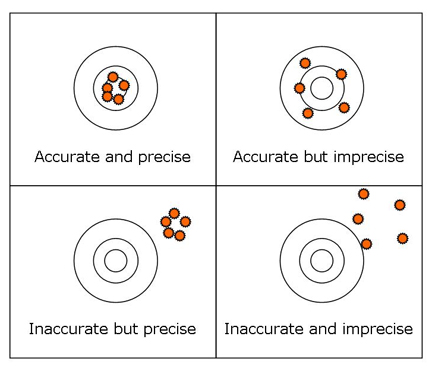
It is the simplest of questions and upon which all management is based. It is also the first thing most hunters want to know. How many deer are there? The answer? Well, there are no answers, only estimates. In addition, one needs to understand the difference between precision and accuracy. Think of precision as shooting a five-shot, half-inch group at 100 yards, but the group is 20 inches high and to the right. The shots have been very precise, almost in the same hole, but they were not accurate because they were far from the center of the target. Accuracy is hitting the bullseye. So, an estimate can be precise without being accurate. Estimates that are both precise, low variation, and accurate, close to the true number, are very difficult and very expensive to obtain. Moreover, all population estimates contain assumptions, as well as sampling errors and statistical variation.
Since the advent of modern game management, various methods have been developed to count wildlife. Entire books have been written on the subject and there are enough scientific studies to fill a small library. Here, I will discuss only the techniques that have been, or are commonly used to estimate the number of mule deer and elk on western ranges. This includes ground counts, aerial surveys, population models, pellet-group counts, and thermal imaging.
The oldest and simplest method is ground counts. As the name implies, these are simply counts conducted on foot, horseback, or from vehicles by either one or more observers. While relatively inexpensive, this method is neither precise nor accurate. There is the problem of double counting when the deer run over the hill into the next canyon that has not yet been surveyed and under counting when animals are hidden from view by vegetation or topography. Today, ground counts are seldom used to estimate herd numbers but they are still commonly employed to estimate fawn:doe ratios or buck:doe ratios under the assumption that doe, fawn, and buck sighting rates are similar, which they are not. If bucks are more difficult to see than does because of the habitat the males occupy, or their behavior, ground counts will underestimate the number of bucks.
Due to the shortcomings of ground counts, wildlife biologist were quick to take to the air, first in airplanes and later in rotary aircraft. To make a long story short, counts from helicopters are more accurate than population surveys from fixed-wings. Any aerial count, though, is subject to errors, because even from the air you do not see all members of a population, be they mule deer or elk. This is what, in the scientific literature, is known as sightability bias. Even in experiments where livestock have been placed in flat, grassy pastures, aerial observers fail to record all the animals.
Lessons from a Transboundary Wolf, Elk, Moose and Caribou System
Mark Hebblewhite. 2007. Predator-Prey Management in the National Park Context: Lessons from a Transboundary Wolf, Elk, Moose and Caribou System. Predator-prey Workshop: Predator-prey Management in the National Park Context, Transactions of the 72nd North American Wildlife and Natural Resources Conference.
Full text [here]
Selected excerpts:
Introduction
Wolves (Canis lupus) are recolonizing much of their former range within the lower 48 states through active recovery (Bangs and Fritts 1996) and natural dispersal (Boyd and Pletscher 1999). Wolf recovery is being touted as one of the great conservation successes of the 20th century (Mech 1995; Smith et al. 2003). In addition to being an important single-species conservation success, wolf recovery may also be one of the most important ecological restoration actions ever taken because of the pervasive ecosystem impacts of wolves (Hebblewhite et al. 2005). Wolf predation is now being restored to ecosystems that have been without the presence of major predators for 70 years or more. Whole generations of wildlife managers and biologists have come up through the ranks, trained in an ungulate- management paradigm developed in the absence of the world’s most successful predator of ungulates—the wolf. Many questions are now facing wildlife managers and scientists about the role of wolf recovery in an ecosystem management context. The effects wolves will have on economically important ungulate populations is emerging as a central issue for wildlife managers. But, questions about the important ecosystem effects of wolves are also emerging as a flurry of new studies reveals the dramatic ecosystem impacts of wolves and their implications for the conservation of biodiversity (Smith et al. 2003; Fortin et al. 2005; Hebblewhite et al. 2005; Ripple and Beschta 2006; Hebblewhite and Smith 2007).
In this paper, I provide for wildlife managers and scientists in areas in the lower 48 states (where wolves are recolonizing) a window to their future by reviewing the effects of wolves on montane ecosystems in Banff National Park (BNP), Alberta. Wolves were exterminated in much of southern Alberta, similar to the lower 48 states, but they recovered through natural dispersal populations to the north in the early 1980s, between 10 and 20 years ahead of wolf recovery in the northwestern states (Gunson 1992; Paquet, et al. 1996). Through this review, I aim to answer the following questions: (1) what have the effects of wolves been on population dynamics of large-ungulate prey, including elk (Cervus elaphus), moose (Alces alces) and threatened woodland caribou (Rangifer tarandus tarandus), (2) what other ecosystem effects have wolves had on montane ecosytems, (3) how sensitive are wolf-prey systems to top-down and bottom-up management to achieve certain human objectives, and (4) how is this likely to be constrained in national park settings? Finally, I discuss the implications of this research in the context of ecosystem management and longterm ranges of variation in ungulate abundance. …
The Danger of Wolves to Humans
Mikhail P. Pavlov. 1982. Appendix-A, Chapter 12, “The Danger of Wolves to Humans” (pp 136-169) IN The Wolf in Game Management. First edition 1982, 2nd edition 1990, Agropromizdat, Moscow. (Translated from Russian by Valentina and Leonid Baskin, and Patrick Valkenburg. Edited by Patrick Valkenburg and Mark McNay)
Full text [here]
Selected excerpts:
Cases of severe unprovoked aggression by wolves toward humans are numerous, so we touch upon a very dramatic subject. Society needs more complete information on the problem to evaluate the true danger of predatory wolves and take precautions. There are tendencies, even among scientists, to believe that aggression by wolves toward humans is quite rare (138). To overcome this, it is necessary to describe some horrible, heart-stopping details of this aggression in Russia, just for the sake of further safety. This is the only way to persuade people how threatening wolves (i.e. anthropophagy) can be. The greatest danger is posed by rabid wolves in settlements and villages. Each rise in the wolf population results in increasing aggression, mostly by rabid animals.
According to N.V. Turkin, in 1870 an explosion of wolves led to numerous cases of humans being bitten by rabid wolves, though only a few of these cases became the subjects of newspaper articles (210: 77). To prove his statement, the above-mentioned author referred to 38 newspaper articles on rabid wolves in various regions of Russia.
Today, even hunters are not well versed in the statistics of wolf rabies. Only the most notorious cases have become known. Thus, in the book “In a native land”, 1952, issue 2, P.V. Plesskiy mentioned that in 1924 in the town of Kirov (then Viatka) two rabid wolves bit about 20 people during one night. Ten of these people died. In documents from the Kirov Game Management Department I found information that in spring 1954 a rabid wolf in Urzhumskiy district bit 3 people and then was killed. …
Later, … P.A. Manteifel regarded as tales and fantasies all rumors about wolves attacking humans. As thorough a researcher of wild animals as he was, he could not accept the very idea of aggression of a normal (non-rabid) wolf towards a human. It was his principle to trust to personally proven facts only. Like many other scientists, Manteifel was sure that through long experience with humans, the wolf has developed an instinctual fear of humans that forbids it to even approach a human.
Manteifel’s idea was so firmly implanted in his numerous apprentices that it would probably still be popular today if it had not been for the events of World War II. These events caused most people to change their general attitude of good will towards the wolf. As a consequence of wolf-human interactions during wartime, a special commission was established, not very widely known then, under the supervision of the technical-scientific council of the Hunting Department in the Russian Federation. Facts about man-eating wolves led to steps intended to increase defenses against wolves. P. A. Manteifel headed the commission, and it’s conclusions and recommendations were presented in a report in November 1947. …
According to the conclusions of the report, sometimes, man-eating wolves proved to be wounded, or weak due diseases, but sometimes the animals were quite “normal”. The document recorded some specific cases of wolf attacks on children and women: 1920, Voronezhskiy district, Roman forestry area, an attack on a woman; 1935, Kuibishevskaya Oblast, villages of Kochetovka and Kanemenki, attacks on two children; 1935, Minsk Oblast, near the settlements of Kozli and Zachastse, attacks on two children; 1936, Minsk Oblast, Lyubanskiy district, attack on a child; 1937, in the same district, more than 16 children were bitten by a wolf; in 1940, in Domanovichskiy district of Minsk Oblast, more than eight children and some women; 1945 in Georgia, in Akhalkalakskiy and Bogranovskiy districts, some children were attacked; 1945 in the settlement of Dagestan, some children attacked; 1946, Voronezh Oblast, Polenovskiy district, a child was attacked; at the railway station at Bologoye, two children were stolen by wolves from a house; 1946 in Kaluzhsk Oblast, Ludinovskiy district, 10 children were attacked; and in 1947 in Kirovskiy Oblast, 27 children were attacked. The document stated that most of the children were torn to pieces.
The Kaibab Deer Incident: Myths, Lies, and Scientific Fraud
Charles E. Kay. 2010. The Kaibab Deer Incident: Myths, Lies, and Scientific Fraud. Muley Crazy Jan/Feb 2010 (posted with permission of the author).
Full text:
The North Kaibab, or simply the Kaibab, is famous for producing large-antlered, record-book mule deer. The Kaibab historically, however, is also noted for something else — controversy! At least one book has been written on the Kaibab Deer Incident, as well as scores of scientific reports and monographs. The Kaibab figures prominently in the history of mule deer management in the West and even the U.S. Supreme Court has weighed-in on the Kaibab. Although the story has changed over the years, the Kaibab is still discussed in wildlife textbooks and the ghost of the Kaibab stalks wildlife management to this day.
The Kaibab Plateau is bordered on the south by the Grand Canyon, on the west by Kanab Canyon, and on the east by Houserock Valley. The plateau, which is entirely in Arizona, slopes gently downward to the north and ends near the Utah stateline. The plateau reaches a height 9,200 feet and although the Kaibab receives abundant snow and rainfall, surface water is exceedingly rare due to area’s geology. Winter range is abundant on the Kaibab, while summer range is more limited-the exact opposite of most western situations. Approximately two-thirds of the mule deer on the Kaibab winter on the westside with the remaining deer wintering to the east. There is very little movement of mule deer into Utah. Thus, the deer herd on the Kaibab is essentially an insular population with little immigration or emigration. Cliffrose is the most important browse species on the plateau’s shrub-dominated winter ranges.
The Kaibab was established as a Forest Reserve in 1893 and in 1906 was designated as the Grand Canyon National Game Preserve by President Theodore Roosevelt. Today, the southern end of the plateau is in Grand Canyon National Park, while the rest of the area is managed by the U.S. Forest Service. When the Kaibab was declared a game preserve in 1906, hunting was prohibited and the federal government began an extensive predator control program. Between 1907 and 1923, an average of 40 mountain lions, 176 coyotes, 7 bobcats, and 1 wolf were killed each year. In all, only 30 wolves were ever killed by government agents on the Kaibab. Instead, the main predators were mountain lions and coyotes. The Forest Service also reduced the number of livestock permitted to graze the plateau.
In response to those measures, the mule deer herd irrupted from around 4,000 animals in 1906 to an estimated 100,000 head in 1924. As might be expected, the growing deer population severely overgrazed both the summer and winter ranges. This lead to a number of studies and reports, as well as a dispute between the federal government and the state of Arizona. In short, the Forest Service said that the deer herd needed to be reduced to prevent further range damage but the state refused to open the area to hunting. In response, the federal government claimed that it could kill deer on the Kaibab to protect habitat without a state permit. Needless to say, Arizona objected and the ensuing legal battle made it all the way to the U.S. Supreme Court.
The Supreme Court agreed that the Kaibab deer herd had exceeded the range’s carrying capacity and that overgrazing by mule deer had denuded public lands. The Court also sided with the federal government in ruling that the Forest Service could authorize hunting on the Kaibab without state approval. This legal precedent still stands and means that when push come to shove, the federal government can control wildlife populations on public lands. Arizona had no alternative but to capitulate, but it was too late because the plateau’s mule deer had experienced a major die-off and by 1931 fewer than 20,000 animals were left.
For years, the Kaibab deer irruption, overgrazed range, and subsequent die-off were cited in wildlife textbooks as a classic example of what happens when predators are controlled and hunting eliminated. “The Terrible Lesson of the Kaibab” became a cornerstone of modern game management and an example of why hunters were needed to harvest surplus animals. Even Aldo Leopold cited the Kaibab in his study of mule deer overgrazing on western ranges. This interpretation of the Kaibab Deer Incident was accepted as fact for over 40 years until New Zealand biologist Graeme Caughley questioned its validity in a 1970 paper published in Ecology-the scientific journal of the Ecological Society of America. Caughley’s reanalysis of the Kaibab Deer Incident involved primarily published mule deer population estimates. In a later paper, Caughley admitted that he had never set foot on the Kaibab and that he had conducted his reanalysis from a desk 10,000 miles away! Caughley cautioned that his “interpretation may therefore be wrong.”
Deer, Elk, Bison Population Dynamics Predators Wildlife Habitat Wildlife Management Wildlife Policy
by admin
Comments Off
Wolf Predation: More Bad News
Charles E. Kay. 2008. Wolf Predation: More Bad News. Muley Crazy, Sept/Oct 2008 (posted with permission of the author).
Full text:
As I explained in an earlier article, pro-wolf advocates are now demanding 6,000 or more wolves as one interbreeding population in every western state. Pro-wolf advocates also claim that predation, in general, and wolves in particular have no impact on prey populations. Recent research by Dr. Tom Bergerud and his colleagues, however, paints an entirely different picture and serves as a poignant example of what will happen to the West’s mule deer if pro-wolf advocates have their way.
Woodland and mountain caribou have been declining throughout North America since European settlement. Many attribute the decline to the fact that caribou must feed on aboral or terrestrial lichens during winter, a food that is being destroyed by logging, forest fires, and other human activities; i.e., modern landuse practices are to blame. While others attribute the decline to predation by wolves and other carnivores. To separate between these competing hypotheses, Dr. Tom Bergerud and his co-workers designed a series of simple but elegant experiments and have now accumulated 30 years of data.
In the northern most arc of Lake Superior lie a cluster of seven major islands plus smaller islets. The Slate Islands are five miles from the mainland at their nearest point and only twice during the last 30 years has winter ice bridged that gap. Terrestrial lichens are absent, plus the islands have been both logged and burned, making them unfit for caribou according to most biologists. The Slate Islands lack wolves, black bears, whitetailed deer, and moose, but caribou are indigenous. As a companion study, Bergerud and his associates chose Pukaskwa National Park, which stretches for 50 miles along the north shore of Lake Superior. In contrast to the Slate Islands, Pukaskwa has an abundance of lichens, which are supposed to be a critical winter food for caribou, but unlike the Slate Islands, Pukaskwa is home to wolves, bears, moose, and whitetails. Woodland caribou are also present.
So we have islands that are poor caribou habitat, but which have no predators, versus a nearby national park that is excellent caribou habitat but which contains wolves. Now according to what many biologists and pro-wolf advocates would have you believe, habitat is the all important factor in maintaining healthy ungulate populations, while predation can largely be ignored. Well, nothing could be further from the truth. Habitat it turns out, is irrelevant and ecologists have been, at best, braindead for years.
Despite the supposedly “poor” habitat in the Slate Islands, Bergerud and his research team recorded the highest densities of caribou ever found anywhere in North America. Moreover, those high densities have persisted since at least 1949 when the herd was first censused. More importantly, the density of caribou in the “poor” habitat, but predator-free, Slate Islands was 100 times that in Pukaskwa National Park where predators hold sway. 100 times or 10,000% more caribou per unit area. A significant difference by any objective standard.
Then during the winter of 1993-94, a natural experiment occurred when Lake Superior froze and two wolves crossed to the Slate Islands. Within days, the two wolves proceeded to cut through the Slate Island caribou like a hot knife through butter. Because caribou, like mule deer, are exceedingly susceptible to wolf predation. Only when the two wolves disappeared did caribou numbers recover.
A second set of manipulated experiments was conducted when Bergerud and his associates transplanted Slate Island caribou to adjoining areas with and without wolves. A release to Bowman Island, where wolves and moose were present, failed due to predation. A second release to Montreal Island doubled in numbers until Lake Superior froze and wolves reached that island. A third release was to Michipicoten Island where wolves were absent but so too were lichens. Despite the “poor” habitat, those caribou increased at an average annual rate of 18% for nearly 20 years. A fourth release to Lake Superior Provincial Park on the mainland failed due to wolf predation. Thus, the data are both conclusive and overwhelming. Habitat is largely irrelevant because caribou numbers are limited by wolf predation. Bergerud goes so far as to say that managers have wasted the last 50 years measuring lichens! Remove the wolves and you have 100 times more caribou, even on supposedly “poor” ranges.
Two Views of the Serengeti: One True, One Myth
Charles E. Kay. 2009. Two Views of the Serengeti: One True, One Myth. Conservation and Society 7(2): 145-147, 2009
Full text [here]
Selected excerpts:
A book review of:
Sinclair, A.R.E., C. Packer, S.A.R. Mduma and J.M. Fryxell (eds.). Serengeti III: Human Impacts on Ecosystem Dynamics. Chicago: University of Chicago Press. 2008. x+522 pp. (Hardcover). ISBN 978- 0- 226-760339. (Paperback). ISBN 978-0-226-76034-6. and
Shetler, J.B. Imagining Serengeti: A History of Landscape Memory in Tanzania from Earliest Times to the Present. Athens: Ohio University Press. 2007. xiii+378 pp. (Hardcover). ISBN 978-0-8214-1749-2. (Paperback). ISBN 978-0-8214-1750-8.
*****
Serengeti III is the third book that has come to print on the ecological studies conducted in the Serengeti ecosystem. The first book appeared in 1979, while the second was published in 1995.[1][2] The first two books of the series dealt primarily with wildlife issues and if indigenous people were mentioned at all, it was in the pejorative as ‘poachers.’ As this new volume is subtitled Human Impacts on Ecosystem Dynamics, I was expecting a more balanced presentation of human-wildlife conflicts, but that turned out not to be the case.
Serengeti III contains 16 chapters by 57 authors, forty-one of whom are from Western Europe or North America, primarily the United States. Of the 16 authors that list a Tanzania or Kenya address, a large number are either from the West or have been trained in the West. Of the 16 senior authors, 15 are from the U.S., Canada, or Western Europe, while the one with a Kenya address was born in the United States and educated in Britain. In addition, the authors fail to acknowledge, or even mention, many of the major works that historians, social scientists and others have published on wildlife-human issues in Africa. … Needless to say, this biases the analyses and conclusions presented in Serengeti III.
The message of Serengeti III can be summarized in a few sentences. According to the authors, “The Serengeti is one of the premier natural ecosystems in the world” (p. 301), and “The Serengeti is a large, mostly pristine ecosystem [and] as such is one of the most positive examples of conservation in the world, and is a treasure for the entire planet” (p. 434). That is to say, the book’s fundamental premise is that the Serengeti is a wilderness without a human history of any importance. However, according to the authors, this idyllic state of nature is threatened by the indigenous people surrounding the park, who as the authors admit are some of the poorest people on Earth and who receive few benefits from western preservation. “The main conclusion is that unless human population increase in areas surrounding protected areas is stopped, or even reversed, the future of conservation in both the community areas and the protected areas will be seriously compromised” (p. 484). Judging by the general tone of Serengeti III, one wonders what ultimate solution the authors have in mind? Or is this simply a call to expropriate additional indigenous lands to create even larger buffer zones around the park? …
Deer, Elk, Bison Predators Wildlife Management Wildlife Policy
by admin
Comments Off
The Complexities of State Management of Wildlife Under Federal Laws
Budge, Randy*. 2009. The Complexities of State Management of Wildlife Under Federal Laws. Conference of Western Attorneys General, Aug 3-5,2009, Sun Valley, Idaho.
*Randy Budge is an attorney and an Idaho Fish and Game Commissioner. This paper represents his personal views and options, not necessarily that of the entire Idaho Fish and Game Commission or the Idaho Department of Fish and Game.
Full text [here] (4.5 MB)
Selected excerpts:
INTRODUCTION
By far the greatest conservationist of our times was President Theodore Roosevelt, who was driven by a passion to protect wildlife for future generations:
“Wild beasts and birds are by right not the property of the people who are alive today, but the property of the unknown generations whose belongings we have not right to squander.”
In an incredible feat to restore dwindling wildlife and protect wild lands in the early 1900s, Roosevelt was instrumental in bringing under federal protection 230 million acres in the form of 150 national forests, 50 national wildlife refuges, 5 national parks and 18 national monuments. This amounted to an incredible 84,000 acres for each day he was in office. …
A tension has always existed between the rights of the states to manage the wildlife within their borders and the right of the federal government to restrict the taking of wildlife or to otherwise manage wildlife in the national interest. The history of federal and state wildlife legislation exhibits an intricate dance over jurisdiction and the right to manage wildlife.
State wildlife laws are based on the principle states own the wildlife within their borders to be held “in trust” for their citizens. Accordingly, the states have primarily shouldered the responsibility to manage wildlife, and have a proven track record of success. In my opinion, the states are far better suited to manage wildlife within their borders than the lumbering and detached federal bureaucracy because the states are better able to monitor and respond to wildlife needs and threats, and to establish cooperation with landowners and other agencies while recognizing the social values of the residents that regularly interact with wildlife.
Federal wildlife laws generally preempt state laws only when necessary to manage or conserve wildlife species that occupy multiple states. Preemption of state law is an area of considerable complexity to be addressed by a later speaker, so further discussion here is omitted. It should be noted, however, that state laws often expressly include or complement Federal laws such as the Endangered Species Act, whose list of endangered species is usually adopted in full by states in their own legislation of endangered and threatened species. …
The Threat of the Yrmo: The Political Ontology of a Sustainable Hunting Program
Mario Blaser. 2009. The Threat of the Yrmo: The Political Ontology of a Sustainable Hunting Program. American Anthropologist, Vol. 111, Issue 1, pp. 10–20.
Full text [here]
Selected excerpts:
ABSTRACT
Various misunderstandings and conflicts associated with attempts to integrate Indigenous Knowledges (IK) into development and conservation agendas have been analyzed from both political economy and political ecology frameworks. With their own particular inflections, and in addition to their focus on issues of power, both frameworks tend to see what occurs in these settings as involving different epistemologies, meaning that misunderstandings and conflicts occur between different and complexly interested perspectives on, or ways of knowing, the world. Analyzing the conflicts surrounding the creation of a hunting program that enrolled the participation of the Yshiro people of Paraguay, in this article I develop a different kind of analysis, one inspired by an emerging framework that I tentatively call “political ontology.” I argue that, from this perspective, these kinds of conflicts emerge as being about the continuous enactment, stabilization, and protection of different and asymmetrically connected ontologies. [Keywords: political ontology, multinaturalism, multiculturalism, Paraguay, Indigenous peoples]
INTRODUCTION
In 1999, after four years of a strictly observed ban on commercial hunting, news reached the Yshiro Indigenous communities of Northern Paraguay that the activity would be allowed again under the supervision of the National Parks Direction. Through their recently created federation, Uni´on de las Comunidades Ind´igenas de la Naci´on Yshir, the Yshiro leaders inquired from the Parks Direction about permits to hunt capybara (Hydrochoerus hydrochaeris), yacare (caiman sp.), and anaconda (Eunectes notaeus).
They were notified that, although the institution was willing to allow commercial hunting, it actually could not issue the permits as it lacked the necessary resources to send inspectors to supervise the activity. Following the advice from the National Parks Direction, the Yshiro leaders sought support from Prodechaco, an EU–funded sustainable development project that targeted Indigenous peoples. The directors of the Prodechaco agreed to support the Yshiro federation’s bid for hunting permits with the condition that hunting had to be done in a sustainable manner. To make the concept clear, one of them explained in plain words: “The animal population has to be kept constant over the years. You hunt but making sure that there will always be enough animals for tomorrow” (conversation witnessed by author, November 1999).
Espousing a “participatory approach,” Prodechaco framed the relation with the Yshiro federation as a partnership to which the latter would contribute “traditional” forms of natural resource use.
Thus, having agreed on the goal of making hunting sustainable, the Yshiro federation and Prodechaco divided tasks: The federation would promote a series of discussion in their communities to make the goal of sustainability clear and to organize operations accordingly; Prodechaco, in turn, would arrange with the National Parks Direction the technical and legal aspect of the hunting season, which from then on began to be described as a sustainable hunting program. In the ensuing months, each party contributed their specific visions and demands into the making of the program and by the time it was launched it seemed that everybody was operating according to a common set of understandings about what the program entailed.
However, two months after the program’s beginning, Prodechaco and the inspectors sent by the National Parks Direction began asserting that Yshiro and nonindigenous hunters were actively disregarding the agreed-on regulations, thereby turning the program into “depredation” and “devastation” as they entered into private properties and Brazilian territory (Gonzales Vera 2000a). As I show later in the article, this turn of events revealed that the hunting program had been based on a misunderstanding about how to achieve the sustainability of the animal population, albeit a particular kind of misunderstanding. …
Deer, Elk, Bison Research Methods Wildlife Habitat Wildlife Management
by admin
Comments Off
Range Reference Areas and The Condition of Shrubs on Mule Deer Winter Ranges
Charles E. Kay. 2009. Range Reference Areas and The Condition of Shrubs on Mule Deer Winter Ranges. Muley Crazy Magazine. Vol 8(1):35-40.
Dr. Charles E. Kay, Ph.D. Wildlife Ecology, Utah State University, is the author/editor of Wilderness and Political Ecology: Aboriginal Influences and the Original State of Nature [here], author of Are Lightning Fires Unnatural? A Comparison of Aboriginal and Lightning Ignition Rates in the United States [here], co-author of Native American influences on the development of forest ecosystems [here], and numerous other scientific papers.
Full text:
After predator control, range management is the key to maintaining healthy populations of mule deer and other wildlife. It is not just habitat, but the condition of that habitat. For instance, how do you tell if a range is being overgrazed? One way is to establish what are called range reference areas. There are a few places that have never been grazed by livestock, such as steep-sided mesa tops, where the vegetation can be compared with nearby grazed areas. Unfortunately, there are very few places in the West that have never been grazed by livestock and there are even fewer that deer and elk cannot reach. So in most areas it is necessary for managers to create their own range reference areas by building exclosures, which they have been doing for years.
If you are working in a national park or on a winter range where livestock use is prohibited, it is a relatively simple matter to build an 8-foot tall fence around a representative plant community, such as willows, aspen, grasslands, or upland shrubs. Then by measuring the vegetation inside and outside the exclosure on permanent sampling plots over time, you can determine what, if any, impacts wildlife are having on the range. It is also important to establish permanent photopoints when the exclosure is first erected.
If on the other hand, you are working on BLM or Forest Service lands that are grazed by livestock and wildlife, the design of the exclosure is a little more complicated. One part, termed the total-exclusion plot, is still high-game fenced to exclude both livestock and wildlife, while an adjacent area, called the livestock-exclusion plot, is fenced in such a manner that livestock are excluded but mule deer and/or elk can jump the low fence and graze/browse by themselves — please see the accompanying photo. Unfenced adjoining areas are grazed by both livestock and wildlife. Thus by measuring the vegetation in all three areas — total exclusion, livestock-exclusion wildlife-only use, and joint use — you can determine, what vegetation changes, if any, are being caused by wildlife separately from those caused by livestock. The total-exclusion portion of the exclosure can also be used to tell if climatic variation, disease, or insects are causing certain plants to decline.
As you might have guessed, the latter type of range reference area is called a three-part exclosure because vegetation conditions are measured under three different grazing treatments. During the 1950’s and 1960’s when mule deer populations were at all time highs, a series of three-part exclosures were built on BLM and Forest Service allotments throughout the West. Unfortunately the Federal land management agencies have no nation-wide program to maintain those exclosures and many have fallen into disrepair, which is extremely shortsighted. Because without long-term range reference areas there is no way to determine what is happening on our public lands.
The Return of Caribou to Ungava
A.T. Bergerud, Stuart N. Luttich, and Lodewiih Camps. 2007. The Return of Caribou to Ungava.
McGill-Queen’s University Press, Montreal, QU.
Review by Charles E. Kay, Utah State University, from the Canadian Field-Naturalist, Vol. 121, No. 2, April-June 2007
This is the most comprehensive book on caribou ecology and predator-prey relationships that has appeared in many years, perhaps ever. Not only is the research seminal, but the authors systematically dismantle paradigms that have been in vogue for years. According to the authors, caribou biologists have wasted the last 50 years measuring lichens on winter ranges, when they should have been documenting plant production on summer ranges. Wolves, along with human hunters, both limit and regulate caribou populations, not habitat. Food on the summer range only regulates at high densities and only after the range has been overgrazed. Wolves are driving Woodland and Mountain Caribou to extinction. Caribou populations where Wolves are absent maintain densities 100 times greater than predated herds. The reason arctic Caribou migrate to barren ground calving areas is to avoid Wolves tied to den sites at treeline. Even so, if it were not for periodic rabies epidemics, migratory caribou populations would be severely limited by wolf predation. Volcanic eruptions half a world away trigger population declines in arctic Caribou at high densities. And this is just for starters.
The book chronicles the history of the George River Caribou in Labrador and Quebec from near extinction during the early 1900’s to an estimated 600,000 animals before the herd declined. The authors explore the various hypotheses that have been proposed to explain these fluctuations, and present dataset after dataset to separate between competing explanations. In addition, the authors discuss virtually every other caribou population that has been studied in North America, Scandinavia, and beyond, including the difference between migratory and sedentary herds, which is key to understanding this species’ ecology.
To the south of Ungava are small non-migratory populations of Woodland Caribou that are being driven to extinction by wolf predation. But in reality, Moose and Whitetails are to blame. Historically, these areas sustained low-density, widely-spaced Caribou that in and of themselves could support few or no Wolves. Moose and Whitetails were absent. But since the early 1900’s, Moose and Whitetails have extended their range providing alternative prey for Wolves, where none existed before. The Wolves then drive the more vulnerable Caribou ever downward. That is to say, the addition of alternative prey did not buffer predation on Caribou, but instead increased predation pressure contrary to what many people would expect. But that is not the most intriguing part.
Why were Moose and Whitetails absent historically and prehistorically? The authors contend that logging changed coniferous forests to secondary deciduous species favored by Moose and Whitetails. In this I believe they erred because fire history data indicate there was always a strong deciduous component in those forests. Besides, Moose and Whitetails can survive on a winter diet of Balsam Fir, as they do on Isle Royale and Anticosti Island. Instead, I believe that native hunters once kept eastern moose populations in check, as I know native hunters did in western North America where there are more Moose today than at any time in the last 12,000 years - - see Alces 33:141-164. Historically and prehistorically, native hunters extirpated Moose over large areas because, like the Wolves discussed above, humans had a multitude of alternative prey including vegetal resources and fish unavailable to carnivores. As aboriginal hunting pressure declines prey populations increase. In fact, the authors note that the influenza epidemic of 1918 decimated native populations on Ungava, which in turn allowed Caribou to increase.
I certainly commend the authors for presenting data on aboriginal peoples since the time Ungava was first inhabited and for describing how human hunting impacts Caribou. Most other studies of ungulate ecology begin with the premise that native people are irrelevant because everything was a “wilderness” untouched by the hand of man prior to the arrival of Europeans; e.g., see The Kruger Experience. As I have explained elsewhere, however, this is a fatal error. The authors did not make that mistake but I would suggest they need to look deeper into human evolutionary ecology. Take the seemingly random movements of Caribou, a subject covered at length in this book.
Unfortunately, the authors neglected to consult Binford’s data on Inuit caribou hunters - - see Numamint Ethnoarchaeology. One of the questions Binford asked was how do caribou hunters select a direction to hunt when they have no prior knowledge of where the Caribou are? The Inuit base their decisions on what we in the West would call mysticism. By careful observation, however, Binford determined that Inuit pre-hunt behavior was simply a random number generator. That is to say, in these cases, the Inuit hunted randomly, which makes perfect ecological sense, odd though it may seem.
If the Caribou moved in a predictable pattern, they would be easy prey for aboriginal hunters, as the authors note when the Ungava herd is forced by topography to cross the George River at Indian House Lake. If the hunters hunted in a predictable pattern, the Caribou would quickly learn to avoid the hunters, and the people would starve. The solution to the Caribou’s problem is to move as randomly as possible, while the solution to the hunter’s predicament is to hunt randomly. This co-evolution occurred over thousands of years and probably is the only evolutionary stable strategy available to both Caribou and humans and then only because the caribou’s range was vast and diverse. The authors note that even when Ungava Caribou numbered only 15,000 animals, spread over an immense area, aboriginal hunting alone kept the herd from increasing. Using dog sleds, native hunters would follow caribou tracks for days, until the animals were killed or the trail lost.
The Return of Caribou to Ungava should be read by everyone with even a passing interest in northern ecology, caribou management, or predator-prey relationships. It should also be read by historians, anthropologists, and archaeologists.
Deer, Elk, Bison Research Methods Wildlife Management Wildlife Policy
by admin
leave a comment
Caribou Numbers in the NWT — The Outfitter’s Battle
John Andre. 2007. Caribou Numbers in the NWT — The Outfitter’s Battle (PowerPoint presentation). Shoshone Wilderness Adventures, Lac de Gras, Northwest Territories, CA.
John Andre is majority stockholder in two Canadian corporations, Qaivvik, Ltd. and Caribou Pass Outfitters, Ltd.
Full PowerPoint presentation [here] (2.44MB)
Selected excerpts:
The caribou have been hunted for tens of thousands of years by the aboriginal peoples of the north. The health of the caribou herds is sacred to them, it is part of their very being. Generation after generation followed the caribou, or waited for them to come. They understood the movements of the great herds, and the cycle of feast and famine. Now, with “modern” technology, we track caribou with satellite collars, count nematodes in their droppings, and census them using fancy terms such as linear regression analysis and coefficient of variation. It is not an easy job, counting over a million animals, scattered over tens of thousands of square miles of wilderness. This presentation is not meant to degrade, in any way, the efforts of some of the wildlife biologists that have worked hard over the last 60 years, risking their lives in an unforgiving environment, with limited budgets and manpower, to study and better understand the caribou.
The Problems Begin
In late 2005, the government split the former RWED into ENR (Environment & Natural Resources) and ITI (Industry, Tourism, and Investment.) It may or may not be a coincidence, but this is when problems with the government began.
In May of 2006, we were abruptly told that we had to stop selling caribou hunts for that year; that the caribou numbers had dropped significantly. This cost the industry three months of sales, and hundreds of thousands of dollars. The question is, if the next survey hadn’t been done yet, how did the government know for sure the herds were down? Was the outcome preconceived?
In June of 2006, the Bathurst herd was surveyed, and was down to 128,000 caribou. Minister Miltenberger, of the ENR , told the outfitting industry that they were cutting our tag quotas back to the pre-2000 level of 132 tags, for the 2007 season. At the same time, resident hunters were reduced from 5 tags to 2 tags, and bulls only. (The harvest of mature bulls has consistently been shown to have zero effect on overall ungulate population growth.) The outfitting industry, although not necessarily agreeing with their numbers or science, wanted to do their part to help the caribou, and so we accepted this slashing of our industry by nearly 30%.
The fact is, we hadn’t looked at the numbers carefully enough.
Variation In Mitochondrial DNA and Microsatellite DNA in Caribou (Rangifer Tarandus) in North America
Matthew A. Cronin, Michael D. Macneil, and John C. Patton. 2005. Variation In Mitochondrial DNA and Microsatellite DNA in Caribou (Rangifer Tarandus) in North America. Journal of Mammalogy, 86(3):495–505, 2005.
Full text [here]
Selected excerpts:
ABSTRACT
Genetic variation of caribou (Rangifer tarandus) at 18 microsatellite DNA loci and the cytochrome-b gene of mitochondrial DNA (mtDNA) was quantified in 11 herds of 3 North American subspecies: Alaskan barren ground caribou (R. t. granti), Canadian barren ground caribou (R. t. groenlandicus), and woodland caribou (R. t. caribou). Phylogenetic analysis of 1,194 nucleotides of cytochrome-b sequence resulted in a clade of 52 genotypes in R. t. granti, R. t. groenlandicus, and in 1 herd of R. t. caribou, and a clade of 7 genotypes in R. t. caribou. mtDNA sequence divergence is approximately 1% between these clades and 0.3–0.6% within these clades. The subspecies do not have monophyletic mtDNA, but do have different frequencies of mtDNA genotypes. Microsatellite allele frequencies also are differentiated between the woodland (R. t. caribou) and barren ground (R. t. granti and R. t. groenlandicus) subspecies. An exception is the George River herd in Labrador, which is classified as R. t. caribou but has mtDNA and microsatellite allele frequencies intermediate between the other herds of R. t. caribou and R. t. groenlandicus. Within subspecies, there is relatively low differentiation of microsatellite allele frequencies and mtDNA genotypes among herds of R. t. granti and R. t. groenlandicus, and relatively high differentiation of microsatellite alleles and mtDNA genotypes among herds of R. t. caribou in 4 geographically separate areas in Canada. The extent of differentiation of mtDNA genotype frequencies and microsatellite allele frequencies within and among each subspecies reflects past and present gene flow among herds. Issues related to subspecies, populations, ecotypes, and herds are discussed.
more »